

The king of the Nicolaitans wearing Nico brand shoes. Too on the nose.



Talitha Kumi
The record of the healing of the bleeding woman is one that I meditate on often. It reminds me of the intentionality of our God. It reminds me that He has laid out a perfect and miraculous plan of redemption for humanity – and of how He is able to use all things for good. It also reminds me of His sovereignty and how important it is to remain humble and yielded to Him.
Because, you see... If it hadn’t been for the synagogue leader’s dying daughter, that unclean woman may have not crossed paths with the man of glory that day.
I don’t think that YeHoVaH intentionally afflicted the twelve year old girl. But through her death, a woman who was well acquainted with suffering was healed. This is but an echo of the salvation and healing we have all received by the suffering of our King Yeshua. And yet, there is another shadow beautifully woven into this story.
In Romans 11:11, Paul says, “…they did not stumble so as to fall, did they? May it never be! But by their transgression salvation has come to the Gentiles, to make them jealous.”
Jairus had faith that Yeshua could save his daughter from death itself, even after the flute-players had been called to begin grieving. But, he did not know that another woman would be saved on the way to his daughter’s resurrection.
The Father knew. He knew that the little girl would be brought back to life, and that her temporary struggle would bring another grieving soul to salvation.
The woman who was unclean for twelve years had faith, too. She knew that if she could just grab hold of Yeshua’s tzitziot that she would be healed!
I see such a clear parallel in this story. Twelve is always a reference to Israel. This almost-dead little girl, the daughter of the synagogue leader named Jairus, is like a temporarily-blinded Israel.
“God gave them a spirit of stupor, eyes to see not and ears to hear not, down to this very day.” Romans 11:8
In YeHoVaH’s mercy and great grace, not only did His only Son offer himself up willingly on our behalf, but an entire nation – the Almighty’s beloved – was spiritually blinded so that the entire world would have the opportunity to grab hold of the tzitzit of King Yeshua.
I also find it interesting that the unclean woman was in this condition for twelve years. She, too, is Israel as are all believers in Yeshua!
This gives me such great hope! That means that YeHoVaH was aware of her affliction and suffering. From His position in the heavenlies, it would all be worthwhile because He had a plan not just to save her body, but to save her soul!
How often do we grieve the way that Jairus and his family grieved over their dying daughter? It reminds me of the pain we feel for those who have not yet become believers in Yeshua.
But what if their awakening is running on the Almighty’s timeclock? What if their blindness and suffering is intended to save another?
One thing I know is that YeHoVaH is aware and desiring salvation and healing for them. Let’s be like Jairus and keep petitioning Yeshua on their behalf.
And let’s remember to remain humble when we encounter those who do not believe, especially our brother Judah! We don’t know every detail of God’s sovereign and miraculous plan, but we do know that one day He will remove the scales from their eyes and say:
“Talitha Kumi!”
Arise, little girl.
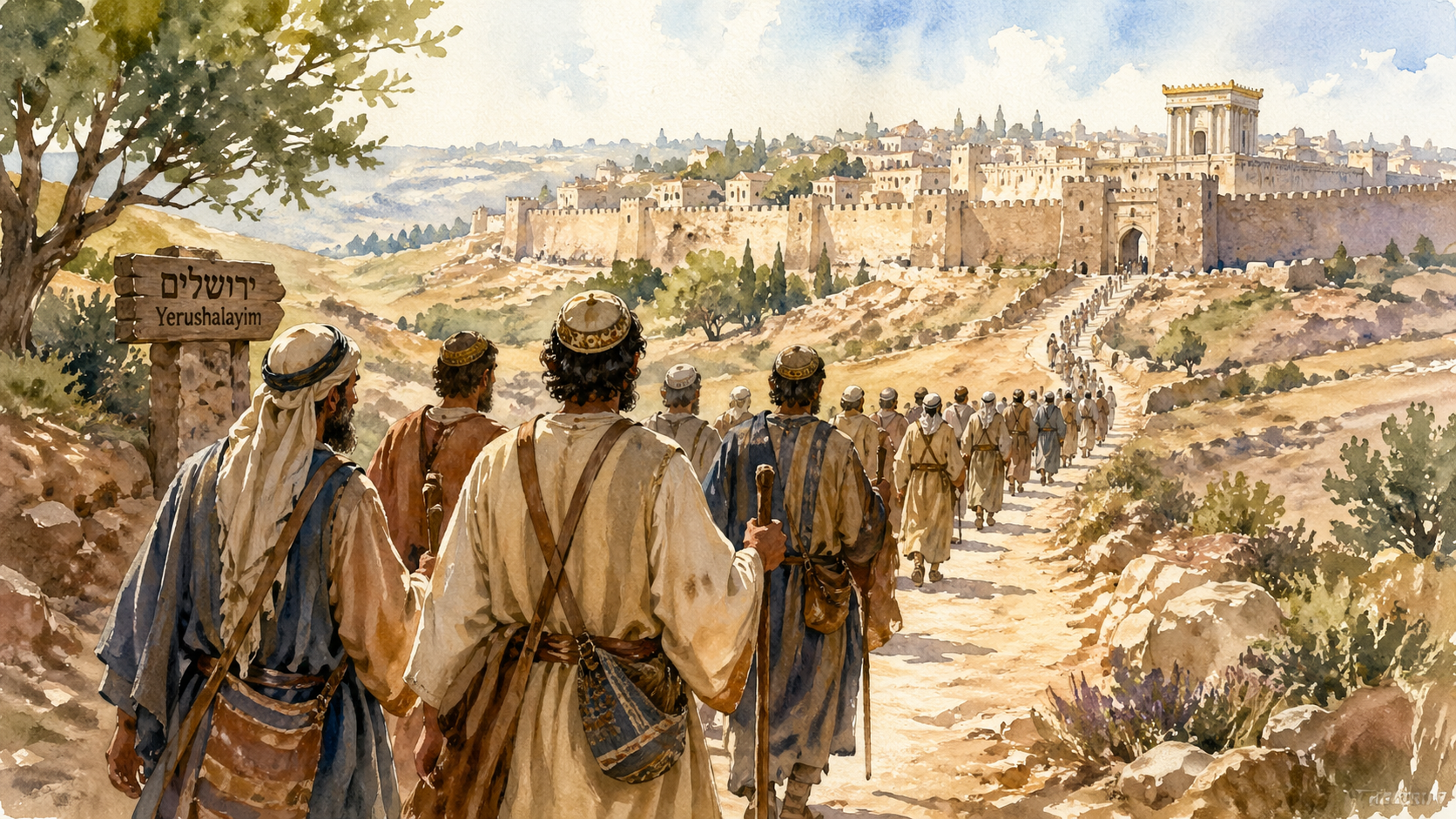
Chag (חַג) – The True Meaning of the Feasts of Yehovah
When we speak about the Feasts of the Creator or the Biblical Feasts, it is common to group all the mo’adim (appointed times) listed in Leviticus 23 into the same category. However, when we carefully observe the Hebrew text and set aside popular interpretations or later traditions, a striking insight emerges: not all mo’adim are chagim (feasts).
What Is a “Chag”?
The term חַג (Chag) refers, in its most specific sense, to a solemn celebration marked by pilgrimage, communal joy, offerings, and rejoicing before the Eternal. It comes from the Hebrew root חוּג (chug), which conveys the idea of “circling,” “going around,” or even “celebrating with circular dances.” This echoes deeply in the ancient practices of Israel, where dancing in circles during celebrations was a tangible expression of joy and unity. Thus, a chag is not merely a holy or set-apart time (mo’ed), but an event of active, collective participation—requiring ascent to Jerusalem and both physical and spiritual involvement from those who take part.
😀 Continue reading: https://aroodawakening.tv/chag-the-true-meaning-of-the-feasts-of-yehovah/

On April 18, there was a planetary alignment, is it true? I wasn't observing the sky that day.