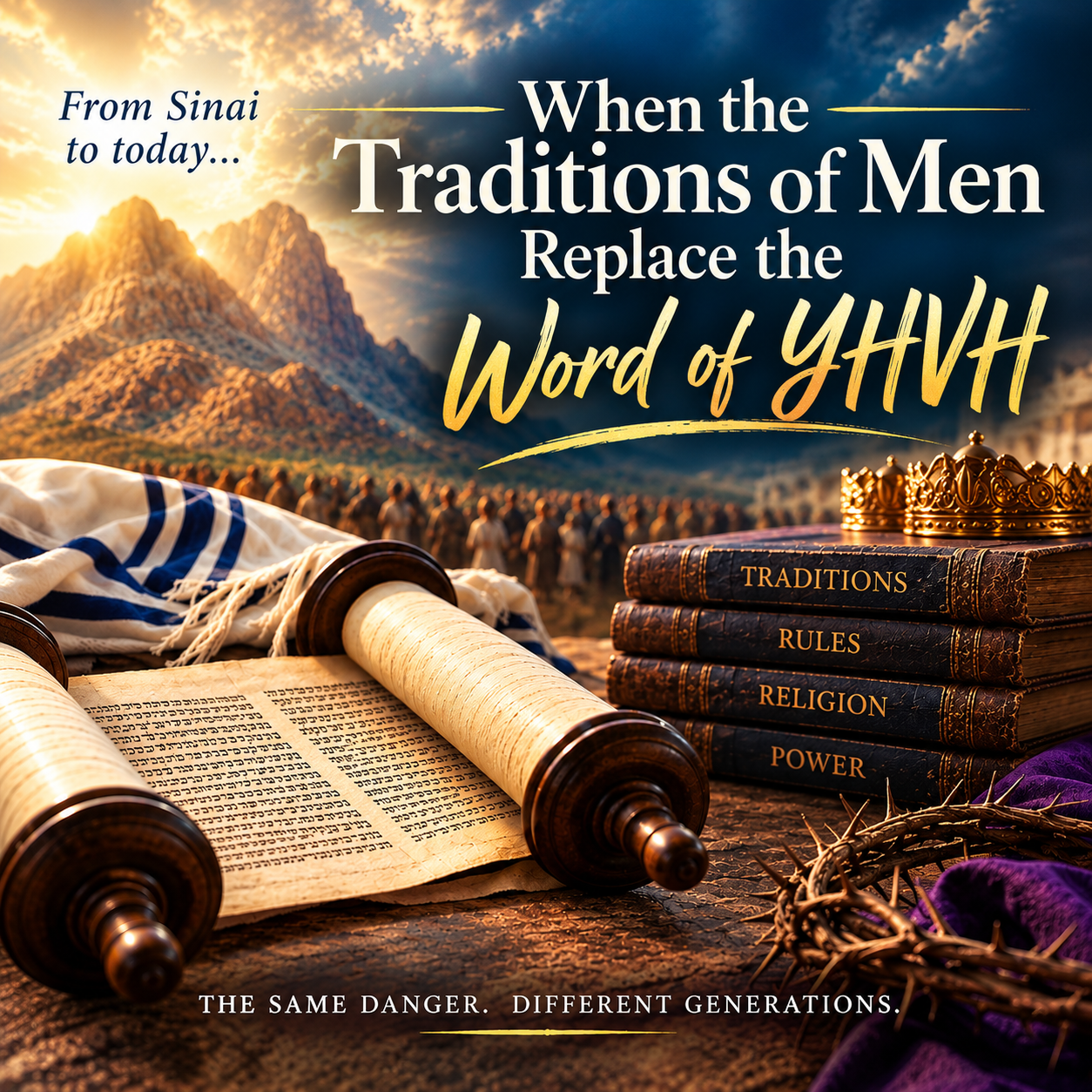

From one of our Ambassadors, Jim Connell. Feel free to comment!! It's a great conversation piece...📜
A little Stream of Consciousness coming into the Fall Feasts of Yehovah, so please forgive the sentence structure, the length of some sentences, and my lack of breaking it into paragraphs.
Yeshua preached against the traditions that men had fastened onto the Torah, as Moses said would happen when the people refused to hear the Torah directly from YHVH Himself. Thundering the whole Torah, not just the first ten statements (Ten Commandments) would have carved a living memory into the hearts and minds of all Israel. Hearing and reading it second hand via Moses didn’t have the same effect, and after Moses died, it allowed men who claimed they had secret knowledge to eventually rise to power. Yeshua directly challenged their descendants and their rules, infuriating them. For example, He healed on Shabbat, which they, not the Torah itself, believed to be a sin. He also rejected the whole handwashing ritual which it was claimed, ordered by YHVH. It was these challenges and others that threatened their power over the laity, combined with Yeshua’s growing popularity with the people (including some of the Sanhedrin and Temple) that drove the more powerful among them to demand the death of Yeshua. This rebellious attitude towards the Torah, the Word Once Delivered, was fully embraced by later believers who steered the early church away from the Torah and towards the popular pagan beliefs which they covered with a thin veneer of Truth and called them a “New Covenant” that rejected the promises made to Abraham and embraced anti-semitism as a whole. Instead of YHVH’s plan to make Israel His model nation, living and teaching the Torah to a fallen world, one group of wicked, power-hungry men added their own rules and contradicted certain others, while a later group of similarly wicked, power-hungry men slapped Yeshua’s name and fame and a smattering of His teachings on the same pagan beliefs they always held and called it The Church, keeping Sunday, treating unclean flesh as food, and inadvertently teaching that Yehovah somehow abandoned His covenant promises to Abraham and his descendants, while also promoting a doctrine of the Trinity that is foreign to the plain testimony of the Torah, the Prophets, and the words of Yeshua.