
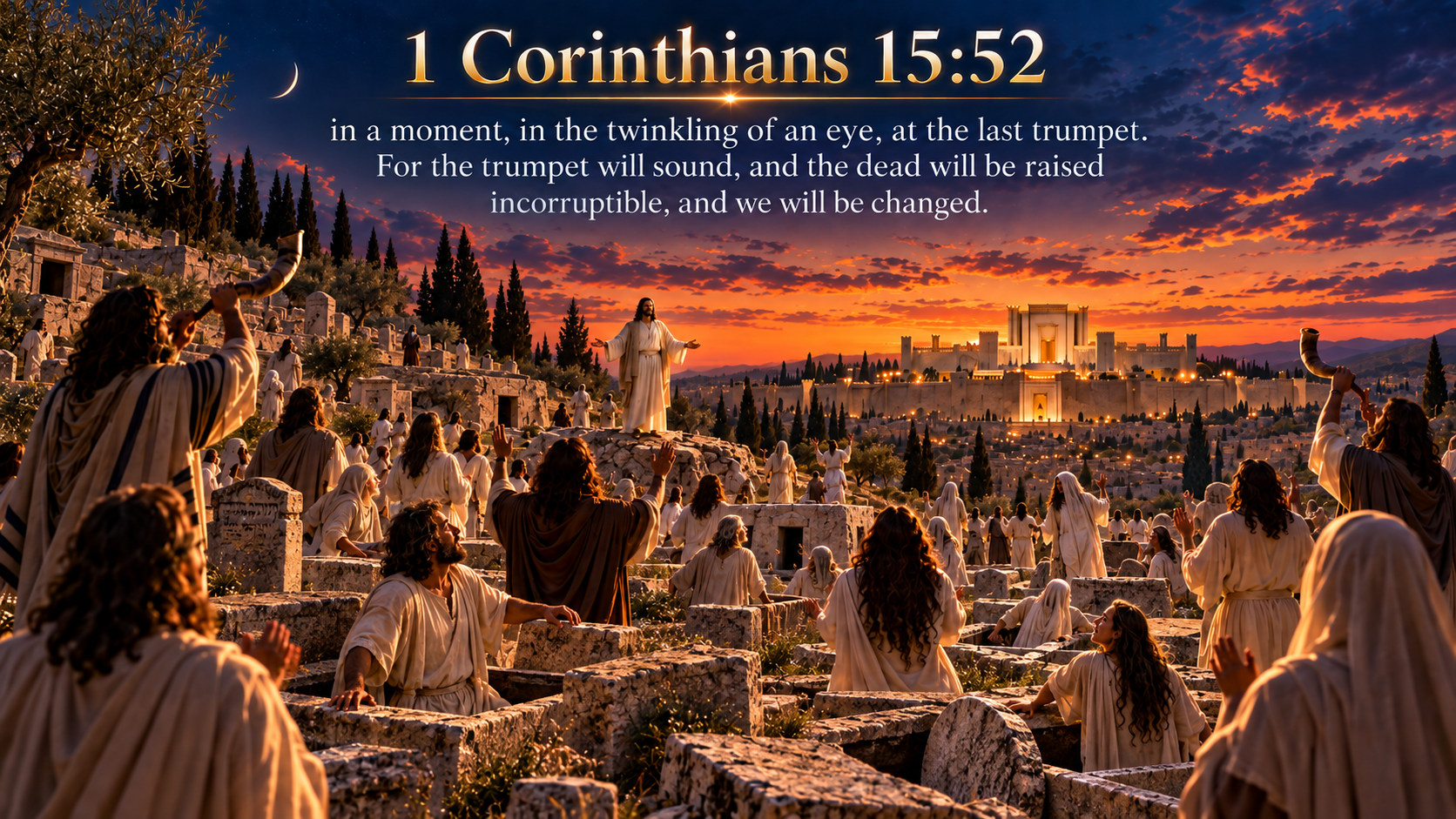

Verse of the Week: 1 Corinthians 15:52
“in a moment, in the twinkling of an eye, at the last trumpet. For the trumpet will sound, and the dead will be raised incorruptible, and we will be changed.”
This verse points us toward one of the great climactic moments of the biblical story: “at the last trumpet” the dead will be raised incorruptible, and those who belong to Messiah will be changed. Paul is not introducing a disconnected New Testament idea. He is drawing upon the prophetic hope already established in the Torah and the Prophets.
The language of the trumpet should immediately turn our attention toward Yom Teruah, the Day of Trumpets appointed by Yehovah in Leviticus 23. Yom Teruah is a commanded memorial of trumpet blasts, a holy convocation that calls Yehovah’s people to attention. Within the larger prophetic framework of Scripture, the sounding of the trumpet becomes closely associated with the gathering of His people, the coming of King Yeshua, and the Day of Yehovah.
This is why Paul’s words carry such prophetic weight. The resurrection does not occur in isolation. It belongs to the events surrounding the return of Yeshua. The prophets repeatedly describe a future Day when Yehovah, through Yeshua, will confront the rebellious nations, vindicate His people, judge wickedness, and establish His righteous rule over the earth. The sounding of the trumpet announces that the age of human rebellion is reaching its appointed end and that King Yeshua is coming.
Zephaniah describes the Day of Yehovah as “a day of the trumpet and alarm.” Joel speaks of the trumpet being blown in Zion because the Day of Yehovah is coming. Isaiah connects the great trumpet with the gathering of Yehovah’s scattered people. Yeshua Himself speaks of His coming in glory and the gathering of His elect with a great sound of a trumpet. Paul then tells us that at the last trumpet the dead will rise.
These passages belong together.
Yom Teruah therefore serves as more than an annual observance. It is a prophetic rehearsal. Each year Yehovah calls His people to remember that history is moving toward an appointed Day. The trumpet reminds us that Yeshua will return as the conquering King, that the nations will answer to Him, that the righteous dead will rise, and that Yehovah will establish His Kingdom upon the earth.
For followers of Yeshua, this should produce both hope and sobriety. The Day of Yehovah is glorious for those who belong to Him, but Scripture also describes it as a day of judgment upon rebellion and wickedness. Biblical hope is therefore never an excuse for complacency. The coming resurrection should compel us toward faithfulness, repentance, holiness, and obedience.
The Torah teaches Yehovah’s people how to walk in His ways, and Yeshua perfectly demonstrated what faithful obedience looks like. Those who truly belong to the coming King should desire to walk according to the ways of His Kingdom now. We keep His appointed times, honor His commandments, pursue righteousness, and remain faithful because we know who our King is and because we know He is returning.
The last trumpet is therefore not merely an interesting detail in Paul’s teaching. It is part of a much larger biblical expectation. Yom Teruah points forward. The prophets warn of the Day of Yehovah. Yeshua promises to return. Paul declares that the dead will be raised. All of these themes converge in the hope of the coming Kingdom.
Death will not have the final word. The kingdoms of this age will not have the final word. The rebellion of the nations will not have the final word. Yehovah has appointed His King, and Yeshua will reign.
So, this week, remember what the trumpet represents. Yom Teruah calls us to awaken, prepare, and look toward the coming Day of Yehovah. Let the promise of the resurrection strengthen you to walk faithfully in Yehovah’s Torah, remain steadfast in Yeshua, and live as a citizen of the Kingdom that is coming. The trumpet will sound. The dead will rise. The King will return. May we be found watching, obeying, enduring, and ready.