
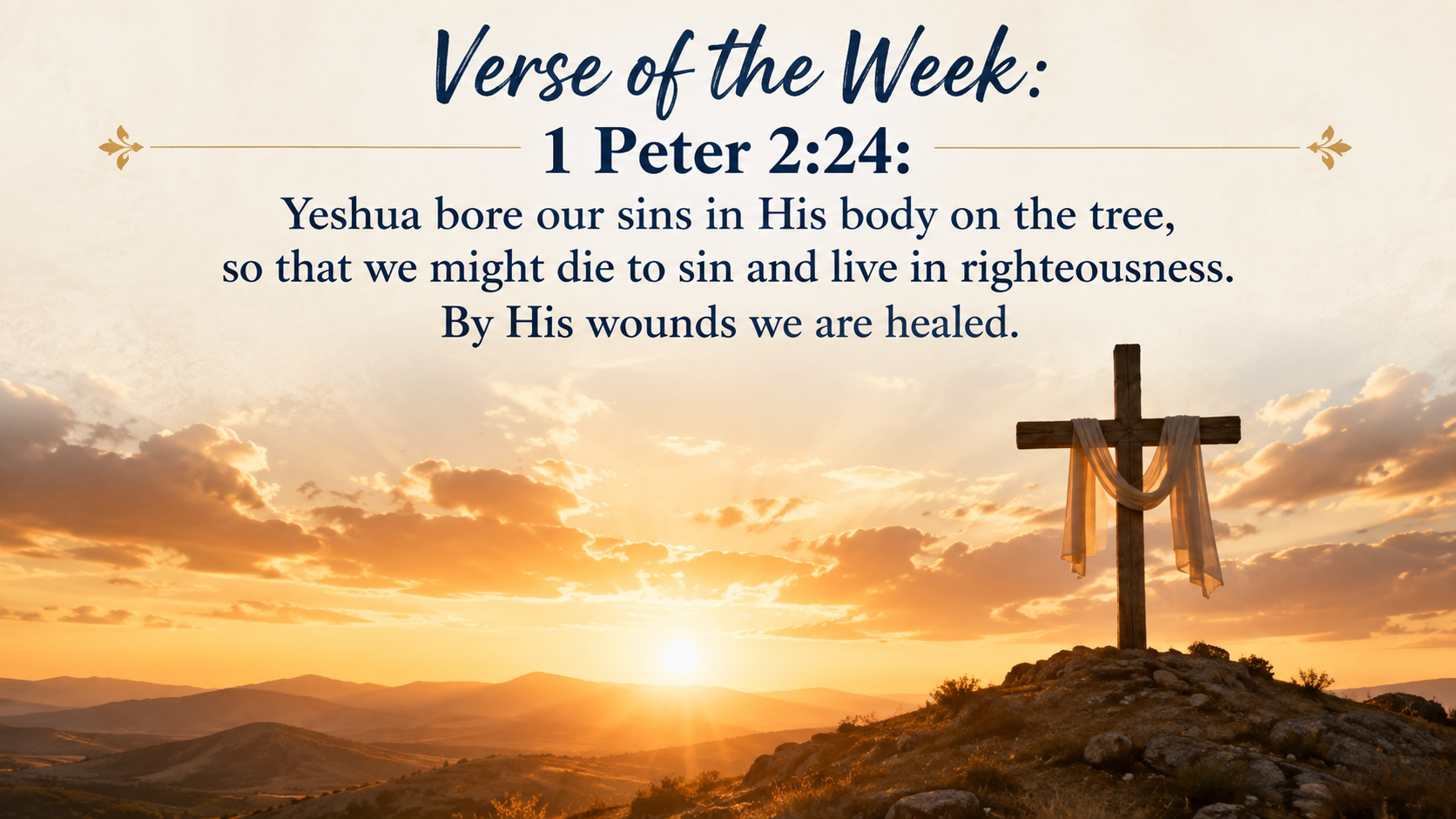

Verse of the Week: 1 Peter 2:24
“Yeshua bore our sins in His body on the tree, so that we might die to sin and live in righteousness. By His wounds we are healed.”
This statement by Peter is not merely a statement about forgiveness. It is a declaration concerning what Yehovah has accomplished through His Messiah and what that accomplishment is meant to produce in His people.
Yeshua did not bear our sins so that we could make peace with sin. He bore our sins so that we could be delivered from its dominion. The goal of redemption has always been to be a people who belong to Yehovah and walk in His ways. This is the pattern established in the Exodus. Yehovah first redeemed Israel from Egypt, then brought them to Sinai and taught them how a redeemed people were to live. Grace came first, but grace was never opposed to obedience.
This is why Peter says that we are to "live unto righteousness." In the biblical worldview, righteousness is not an abstract theological idea. It is a life ordered according to the ways of Yehovah. The Torah reveals His standards of righteousness, justice, holiness, mercy, faithfulness, and love. Yeshua did not suffer in order to abolish His Father's righteous ways. He suffered to cleanse and restore a people who would walk in them from the heart.
The imagery of Yeshua bearing our sins upon the tree also reaches deeply into the Torah and the Prophets. The Torah speaks of the curse associated with one who hangs upon a tree, while Isaiah describes the Servant of Yehovah bearing the sins and wounds of His people. At Golgotha, these strands of Scripture converge. Yeshua willingly carried the judgment that our rebellion deserved. The Shepherd was wounded so that wandering sheep could be brought back to Yehovah.
And this is an important part of the verse that we should not overlook. Peter is not describing a salvation that leaves us exactly where we were. The wounds of Yeshua bring healing. That healing includes restoration from the rebellion, corruption, and alienation caused by sin. We were wandering, but through Messiah we are being brought back under the care of the Shepherd and Guardian of our souls.
The gospel, then, is not the Torah versus grace. It is the story of Yehovah remaining faithful to His covenant purposes despite human rebellion. It is the story that begins in the Torah, unfolds through the Prophets, reaches its decisive moment in the suffering and resurrection of Yeshua, and will ultimately culminate when the Messiah returns, establishes righteousness, and reigns from Zion.
So, this week, let us remember that Yeshua did not bear our sins merely so that we could be forgiven while continuing to live according to our own ways. He bore our sins so that we might die to sin and live unto righteousness. Let us examine our lives, turn away from what Yehovah calls sin, and seek to walk faithfully in His commandments. May the wounds of Yeshua remind us of the terrible cost of rebellion, the extraordinary mercy of Yehovah, and the kind of people redemption is intended to produce: a set-apart, obedient, covenant-faithful people eagerly awaiting the return of our King.