
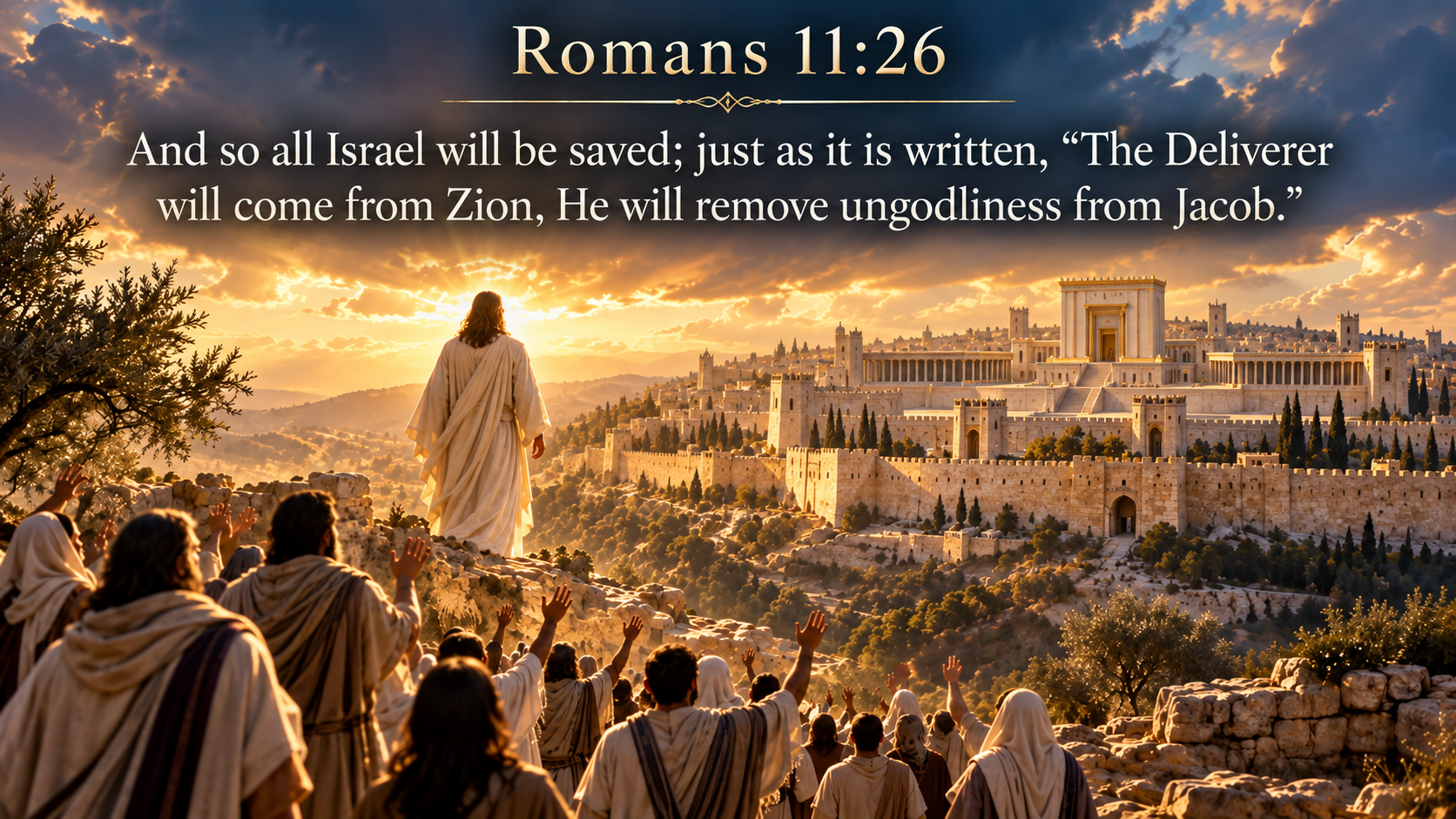

Verse of the Week: Romans 11:26
and so all Israel will be saved; just as it is written, “The Deliverer will come from Zion, He will remove ungodliness from Jacob.”
Yom Kippur, the Day of Atonement, is ultimately about much more than an annual fast. It is a prophetic shadow picture pointing toward one of the greatest events in all of redemptive history: the national repentance, cleansing, and restoration of Israel when Yeshua the Messiah returns.
Romans 11 tells us plainly that Yehovah has not rejected His people. Israel’s present condition is neither total nor permanent. There is a remnant now, but Paul looks forward to a future moment when the surviving remnant of Israel will recognize her Messiah, turn from transgression, and experience the fulfillment of the covenant promises of Yehovah.
This is why Romans 11:26 is so profoundly connected to Yom Kippur.
In Leviticus 16, the sins of Israel were confessed over the living goat, which then bore those iniquities away into the wilderness, outside the camp. The entire ceremony proclaimed a fundamental truth: sin must be dealt with if Yehovah is to dwell in the midst of His people. Atonement, cleansing, repentance, and the presence of Yehovah all belong together.
These prophetic shadow pictures ultimately direct our attention to Yeshua. He suffered outside the gate, bearing reproach and dealing decisively with sin. Yet the prophetic story does not end with His death, burial, and resurrection. Yom Kippur also points forward to the day when Israel will finally understand who Yeshua is.
Zechariah describes that moment with extraordinary clarity. Yehovah will pour out upon the house of David and the inhabitants of Jerusalem a spirit of grace and supplication. They will look upon the One whom they pierced and mourn. This is not merely individual repentance scattered throughout history. It is a national turning, a corporate recognition of the rejected Messiah.
Romans 11 speaks of the same mystery.
The Deliverer comes. Ungodliness is turned away from Jacob. Israel is saved.
This will take place in the context of the return of Yeshua and the great Day of Yehovah. The prophets repeatedly portray the Messiah coming in judgment against the enemies of His people while simultaneously bringing salvation to the surviving remnant of Israel. Isaiah sees the victorious figure coming from Edom and Bozrah, His garments stained from judgment, declaring that He is mighty to save. The Psalms picture the procession of Yehovah the King moving toward His sanctuary, accompanied by singers and musicians. The redeemed return to Zion with singing.
The return of Yeshua is therefore not merely His appearance in the sky followed instantly by the conclusion of the story. Scripture presents a deeply Israel-centered series of events. The King fights. He delivers captives. He gathers the remnant. He judges the nations that have gathered against Jerusalem. He advances toward Zion. Then the rightful Son of David enters Jerusalem and takes His place as King.
This is where Romans 11 leads us.
“All Israel will be saved” is a declaration concerning the covenant faithfulness of Yehovah. He has not forgotten Abraham, Isaac, or Jacob. He has not discarded the promises spoken through Moses and the Prophets. The gifts and calling of Yehovah are irrevocable. Israel’s rebellion does not nullify His faithfulness.
And this should deeply affect how Torah-observant followers of Yeshua approach Yom Kippur.
The appointed times of Yehovah are not empty religious traditions. They are prophetic shadow pictures embedded in the Torah. Yom Kippur calls us to humble ourselves, fast, repent, confess sin, and seek reconciliation with Yehovah. It reminds us that sin is serious, judgment is real, and cleansing is necessary. It also teaches us to look forward to the greater corporate repentance still awaiting Israel.
Our obedience to the Torah should flow from faith, repentance, covenant loyalty, and love for Yehovah. The Torah teaches us what holiness looks like, while Yeshua provides the atoning work that sinners could never accomplish for themselves. Genuine faith should never produce contempt for Yehovah’s commandments. It should produce a people who desire to walk in His ways.
One day Israel will understand this in a manner unprecedented in her history.
The surviving remnant will look upon Yeshua and mourn. The rejected Messiah will be recognized as Israel’s King. The Deliverer will turn ungodliness away from Jacob. The enemies of Yehovah will be judged. The captives will be liberated. The redeemed will ascend toward Zion with songs of joy. Jerusalem will receive her King. Yeshua will sit upon the throne of David, and Yehovah will dwell in the midst of His people.
Yom Kippur therefore contains both a warning and a magnificent promise.
The warning is that sin must be confronted through repentance.
The promise is that Yehovah has not abandoned Israel.
So, as we observe Yom Kippur, let us humble ourselves before Yehovah with fasting, repentance, confession, and sincere teshuvah. Let us examine our lives according to His Torah and turn away from everything that is contrary to His commandments. Let us remember the atoning work of Yeshua and pray earnestly for the day when the veil is removed from Israel, the surviving remnant recognizes her Messiah, and the words of Paul are fulfilled before the eyes of the nations: “And so all Israel will be saved.” May we long for the coming of Yeshua, the liberation of Jerusalem, the restoration of Israel, and the day when the King Messiah takes His rightful throne in Zion and Yehovah dwells among His people forevermore.