Let's do this!


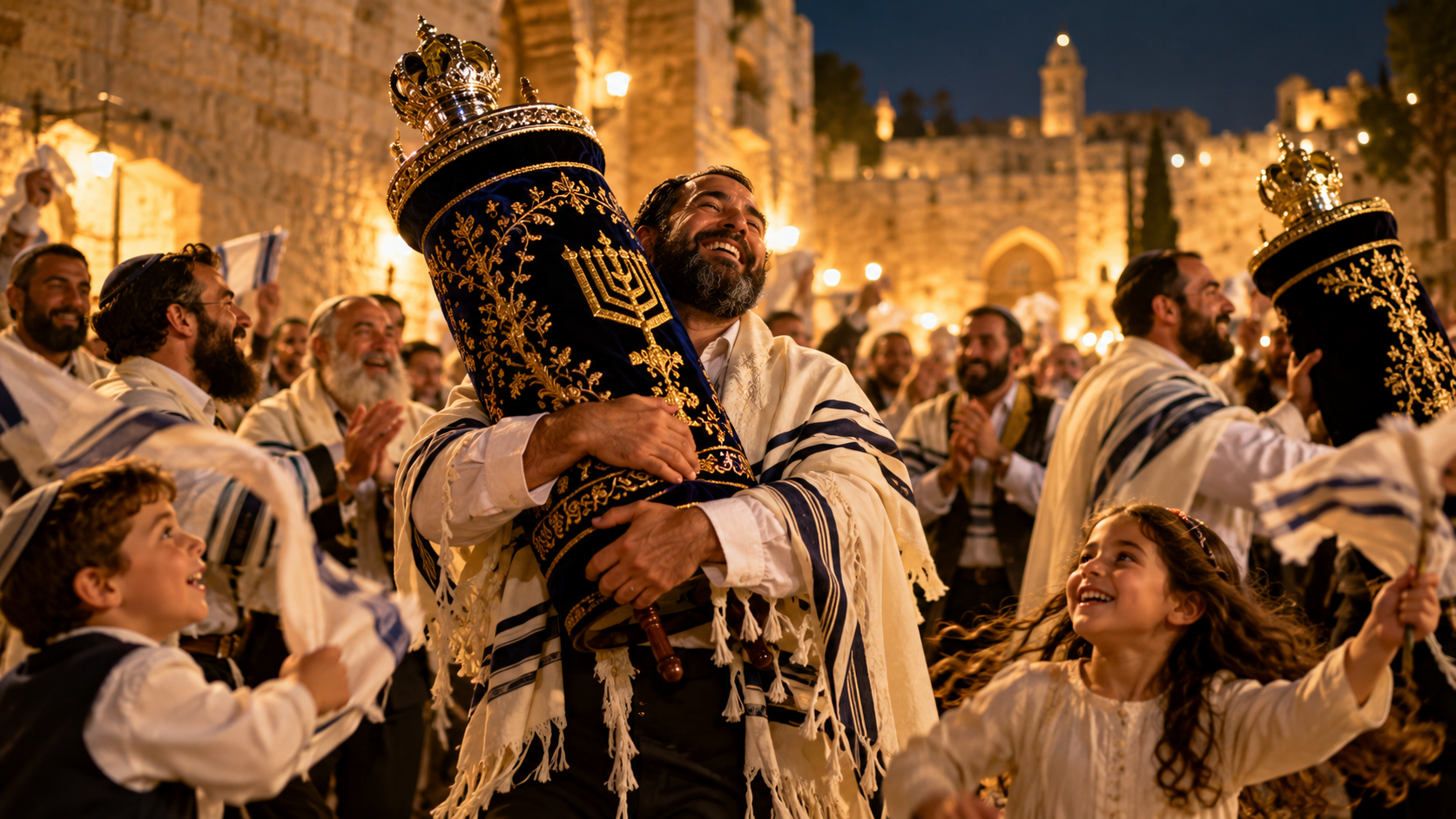
Conclusion of the Torah Reading Cycle 🙌
At the close of the annual Torah reading cycle, Jewish communities gather in celebration as the final words of Deuteronomy are read and the scroll returns once again to Genesis. This tradition, known as Simchat Torah—the “Joy of the Torah”—expresses the enduring delight of returning again and again to Yehovah’s Instruction.
But what about us? Should we also set aside a time to rejoice in the Torah? Can we embrace the beautiful principle behind this tradition without turning the tradition itself into a commandment?
What do you think? How does your family celebrate the joy of Yehovah’s Torah?
Read the full article and join the conversation.
Encouraging Word of the Week ✨
"And so we shall always be with the Master!
Hebrew: "miš·kan"
Rev. 21:1-6
1 And I saw a renewed heaven and a renewed earth, for the former heaven and the former earth had passed away, and the sea is no more.
2 And I, Yoḥanan, saw the set-apart city, renewed Yerushalayim, coming down out of the heaven from Elohim, prepared as a bride adorned for her husband.
3 And I heard a loud voice from the heaven saying, “See, the Booth of Elohim is with men, and He shall dwell with them, and they shall be His people, and Elohim Himself shall be with them and be their Elohim.
4 “And Elohim shall wipe away every tear from their eyes, and there shall be no more death, nor mourning, nor crying. And there shall be no more pain, for the former matters have passed away.”
5 And He who was sitting on the throne said, “See, I make all matters new.” And He said to me, “Write, for these words are true and trustworthy.”
6 And He said to me, “It is done! I am the ‘Aleph’ and the ‘Taw’, the Beginning and the End. To the one who thirsts I shall give of the fountain of the water of life without payment.
Written by Executive Producer Mike Molinar
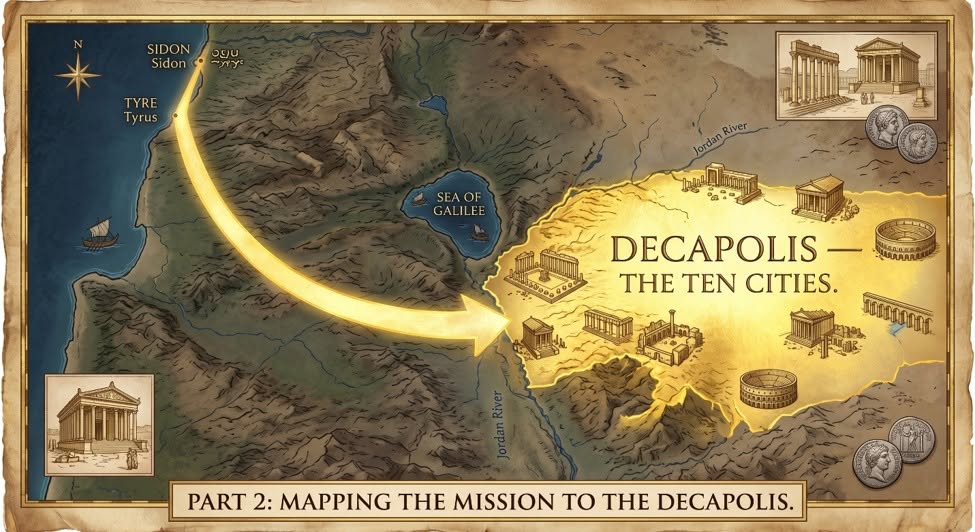
THE BLUEPRINT SHIFT | Part 2: Crossing into the Decapolis — The Land of the "Ten Cities"
In Part 1, we saw Yeshua confront the scribes and Pharisees over their man-made traditions. He proved that human rules and ceremonial hand-washing have zero power over a person’s heart—and that religious fences cannot limit the reach of YHVH.
So what did Yeshua do immediately after exposing their artificial authority?
He packed up, turned His back on the religious establishment in Galilee, and walked directly into "unclean," pagan, non-Jewish territory.
Here is the breakdown of the journey that changed the mission field forever:
1. The Faith of an "Outsider" (Matthew 15:21–28)
First, Yeshua traveled northwest into the region of Tyre and Sidon (modern-day Lebanon). This was strictly Gentile land.
There, a Canaanite woman approached Him, crying out for her demon-possessed daughter. In the social and religious order of that day, she had multiple strikes against her: she was a woman, a Canaanite, and an outsider with no covenant rights under the Law of the rabbis, not Moses
When testing her persistence, Jesus said:
"It is not good to take the children’s bread and throw it to the little dogs." (Matthew 15:26)
Instead of taking offense or walking away, she gave one of the most profound answers in all of Scripture:
"Yes, Lord, yet even the little dogs eat the crumbs which fall from their masters’ table." (Matthew 15:27)
This woman understood what the Pharisees in Jerusalem missed: YHVH’s authority is infinite. She didn't need a full seat at a religious table, nor did she need rabbinic approval. She knew that a single "crumb" of Messiah’s authority was enough to destroy the power of darkness in her home.
Yeshua commended her great faith and healed her daughter instantly from a distance.
2. Mapping the Mission: What Was the Decapolis? (Mark 7:31)
After leaving Tyre and Sidon, look at the precise route Jesus took:"Again, departing from the region of Tyre and Sidon, He came through the midst of the region of Decapolis to the Sea of Galilee." (Mark 7:31)
Let's unpack what the Decapolis actually was:
The Name: Decapolis comes directly from two Greek words—Deka (Ten) and Polis (City). It literally means "The Ten Cities."
The Culture: Located primarily east of the Jordan River, this was a confederation of ten self-governing, highly Hellenized, pagan Greek cities established under Roman dominance.
The Religious Context: To an orthodox Pharisee, the Decapolis was the ultimate symbol of gentiles, pagan worship, and spiritual defilement. It was a region to be avoided.
Yeshua did not take a detour around it; He walked right through the center of it. He brought the Light of the Creator straight into a major Gentile stronghold.
3. Glorifying the God of Israel (Matthew 15:29–31)
When Yeshua arrived in the Decapolis, crowds gathered on a mountain bringing the lame, blind, mute, and maimed. Yeshua healed them all.
Notice the specific detail Matthew includes in verse 31:
"...and they glorified the God of Israel."
This is a massive textual clue. A Jewish crowd in Jerusalem or Galilee would simply say "they glorified God." But here in the pagan Decapolis, a non-Jewish, Gentile crowd was recognizing and glorifying the God of the Hebrews!
THE TAKEAWAY FOR TODAY
The Canaanite woman came asking for a single "crumb" from the table. But as we'll see in Part 3, when Yeshua meets people in the wilderness, He doesn't just pass out crumbs—He sets a full, overflowing feast.
Yeshua deliberately broke through cultural, geographic, and religious barriers to reach those who were considered far off. Are we limiting YHVH's work by staying inside human comfort zones, or are we willing to carry His truth into the strongholds that need it most?
Key Passages to Read Today: Matthew 15:21–31 | Mark 7:31
Stay tuned for Part 3: The Table in the Wilderness — Feeding the 4,000!
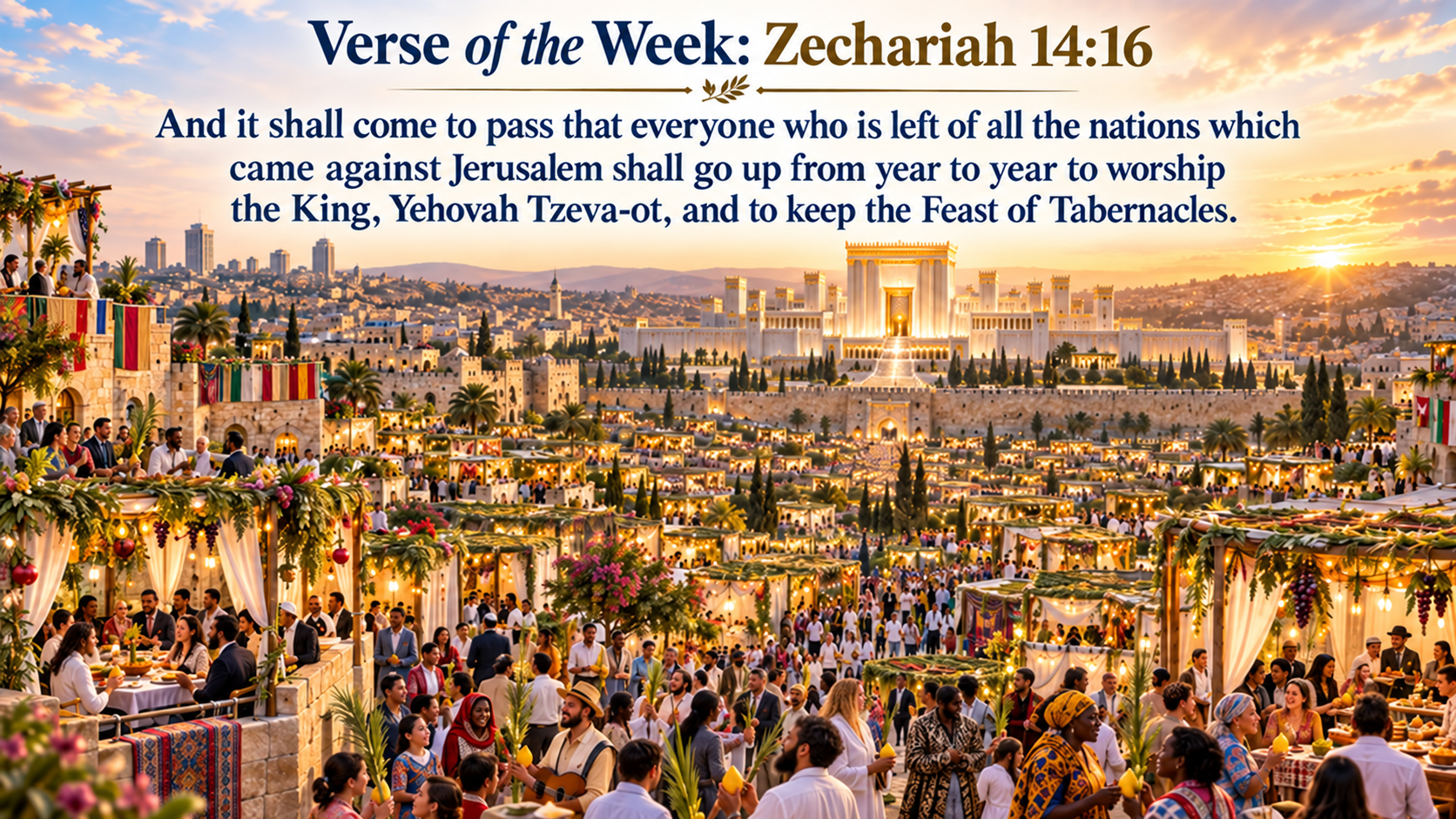
Verse of the Week: Zechariah 14:16
“And it shall come to pass that everyone who is left of all the nations which came against Jerusalem shall go up from year to year to worship the King, Yehovah Tzeva-ot, and to keep the Feast of Tabernacles.”
Zechariah 14 gives us one of the clearest pictures in all of Scripture of the coming Kingdom of Messiah. After the nations gather against Jerusalem, Yehovah intervenes, Yeshua reigns as King, and the surviving nations are commanded to come up to Jerusalem year after year to worship Yehovah Tzeva-ot and to keep Sukkot.
This passage should profoundly shape the way we understand the moedim. Sukkot is not merely an ancient Israelite observance that belonged to a previous era. Zechariah places it squarely in the future reign of Messiah. When Yeshua rules from Jerusalem, the nations themselves will participate in this appointed time. The Torah will not be treated as an embarrassing relic of the past. Rather, as the prophets repeatedly declare, the instruction of Yehovah will go forth from Zion and His word from Jerusalem.
Sukkot points toward the great hope of Scripture: Yehovah dwelling with His people. For seven days Israel was commanded to dwell in sukkot, remembering how Yehovah sustained His people in the wilderness and recognizing that He alone is our covering and provider. Yet the Feast also looks forward. It anticipates the day when the King is physically present, Jerusalem is restored, the nations are being discipled in the ways of Yehovah, and the whole earth is learning what it means to live under the righteous rule of Messiah Yeshua.
There is also something remarkable about the nations described in this verse. These are survivors from the very nations that had come against Jerusalem. Judgment is not the final word. Yehovah's purpose ultimately includes restoration, repentance, and worship. Former enemies come to Jerusalem and bow before the King. The nations that once resisted His purposes are taught to honor His appointed times. The Kingdom transforms enemies into worshipers.
This is why Sukkot carries such enormous prophetic weight. When we build the sukkah, rejoice before Yehovah, remember His provision, and keep His appointed time, we are doing more than remembering the Exodus. We are rehearsing the Kingdom. We are bearing witness to a coming age when Yeshua will reign from Zion and the nations will recognize the God of Israel as King.
The biblical hope is therefore deeply Hebraic, deeply rooted in the Torah, centered upon Jerusalem, and focused upon the return and reign of Yeshua. The prophets do not describe a future in which Israel, Jerusalem, the feasts, and the Torah simply disappear. They describe their restoration and their proper place beneath the authority of the Messiah. Sukkot reminds us that Yehovah's purposes for Israel and the nations are moving toward a real Kingdom on this earth, with a real King reigning from a real Jerusalem.
So, this Sukkot Week, let us rejoice before Yehovah with our eyes fixed on the coming Kingdom. Let us keep His appointed time with gratitude, remembering His faithfulness in the past while looking forward to what He has promised for the future. As we dwell in the sukkah, may we remember that the present age is temporary, but the Kingdom of Yeshua is coming. A day is approaching when the nations will go up to Jerusalem, worship the King, Yehovah Tzeva-ot, and keep the Feast of Tabernacles. May our observance today be a faithful rehearsal for that glorious age to come.
From the Ambassador Club family.... REJOICE! It is the season of our joy. Chag Sukkoth Sameach. Shalom and Ahava, Angie
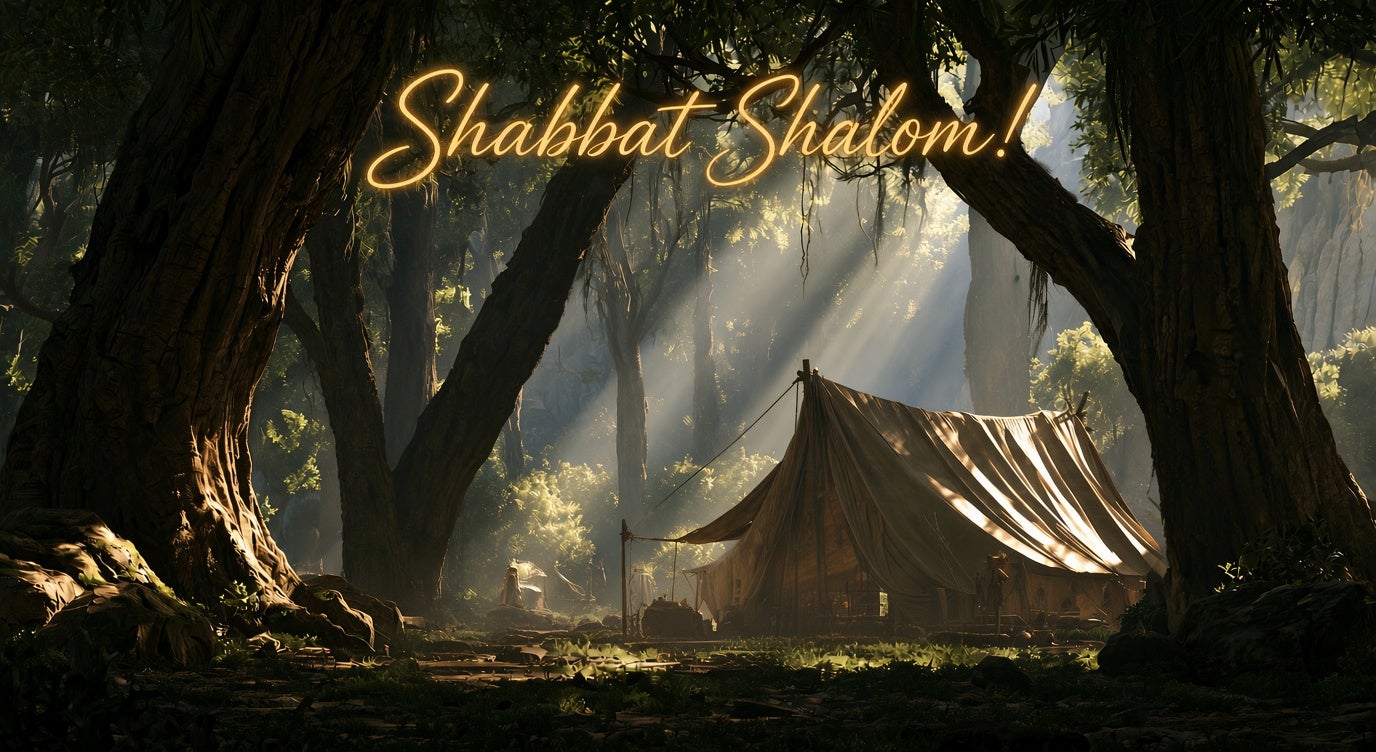
“For in the day of trouble He will hide me in His pavilion; in the secret place of His tent He will shelter me.” -- Psalm 27:5

Encouraging Word of the Week ✨
Our Debts are Paid in Full!
Hebrew: " Kippur "
Hebrews 9: 11-12
11 But Messiah, having become a High Priest of the coming good matters, through the greater and more perfect Tent not made with hands, that is, not of this creation,
12 entered into the Most Set-apart Place once for all, not with the blood of goats and calves, but with His own blood, having obtained everlasting redemption.
Hey there, Torah Fans.... with the Feast of Tabernacles/Sukkot quickly approaching, we would love for you to share pictures and comments of your sukkahs, gatherings, tents, campfires, etc..... 🏕️
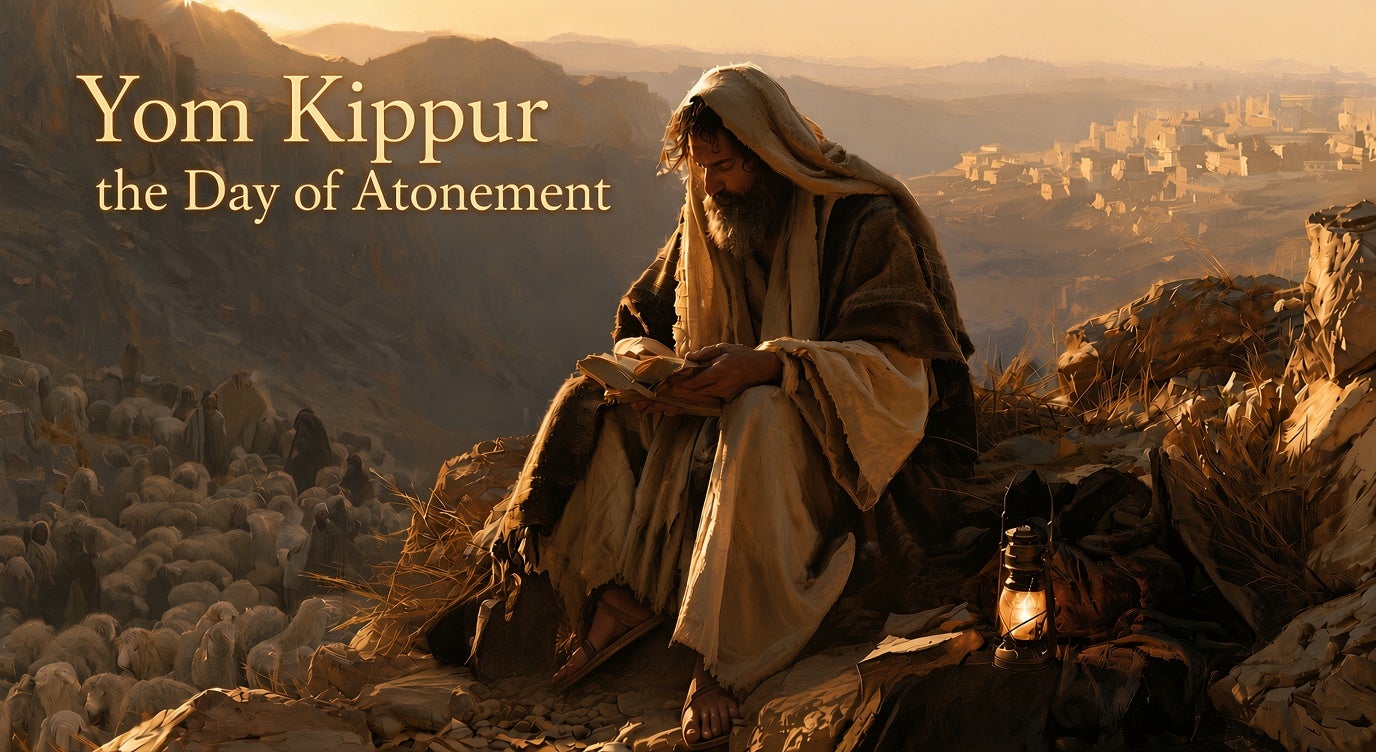
"For on this day He will atone for you, to cleanse you; you shall be clean before the Lord from all your sins.” -- Leviticus 16:30