
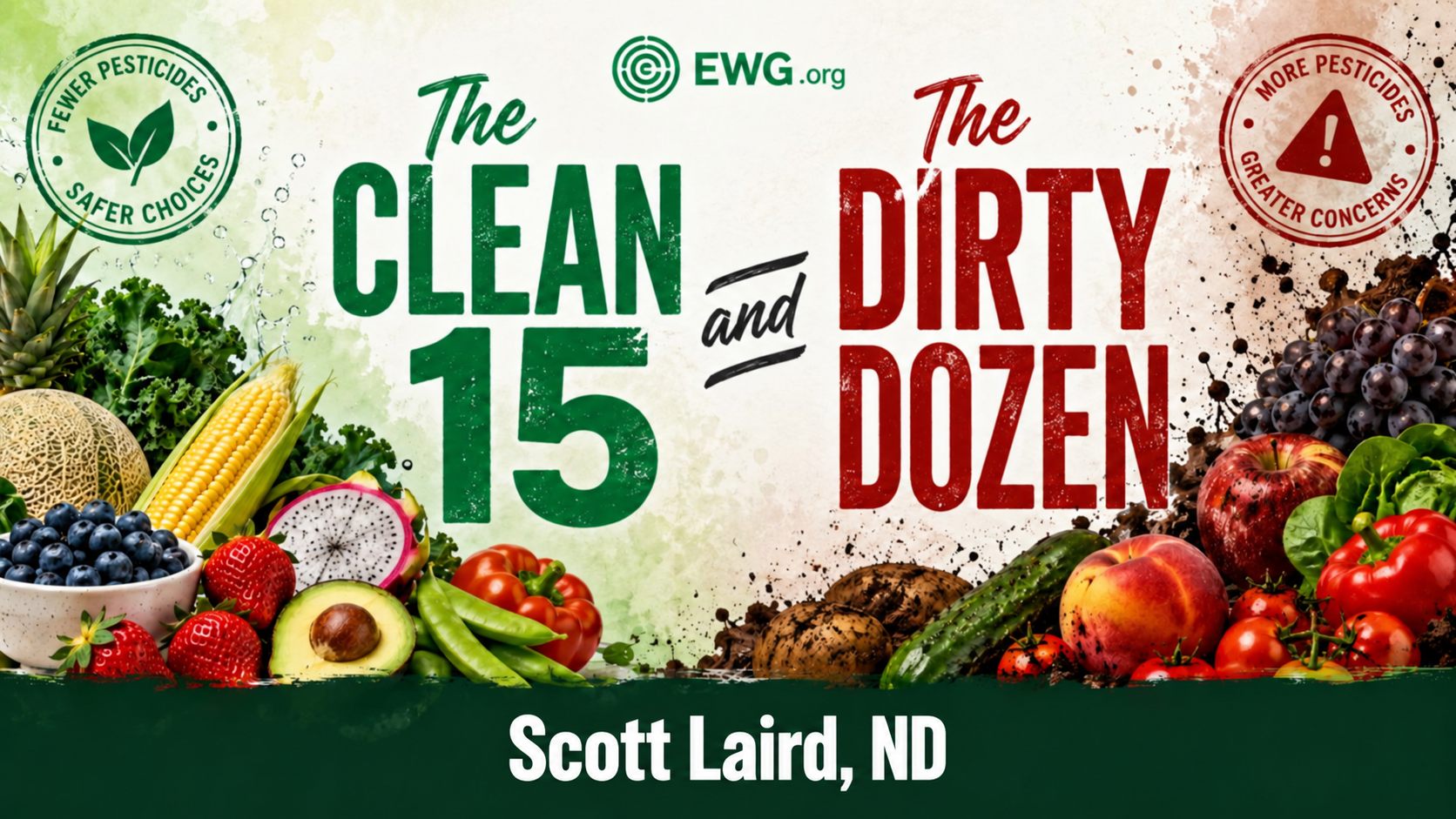
Eating more fruits and vegetables is one of the best ways to support your health, but have you considered what else might be on your produce?
Every year, the Environmental Working Group (EWG) publishes its Dirty Dozen and Clean 15 lists to help consumers make more informed decisions about pesticide exposure.
The Dirty Dozen identifies produce with the highest levels of pesticide residues, while the Clean 15 highlights fruits and vegetables that generally have fewer residues. These lists can be especially helpful if buying everything organic isn't practical for your budget.
Which Foods Should You Buy Organic?
The 2025 Dirty Dozen list includes spinach, kale, collard and mustard greens, strawberries, apples, grapes, nectarines, peaches, cherries, blackberries, pears, potatoes, and blueberries. These are the foods to prioritize when shopping for organic produce.
Strawberries deserve particular attention. According to the findings discussed in this episode, nearly 99% of tested strawberry samples contained residues of at least one pesticide, while some contained multiple pesticides. Washing your berries is a good practice, but it may not remove all residues.
Peaches and apples raise additional concerns because certain chemicals used in conventional production and storage may persist beyond simple washing. Blackberries also joined the Dirty Dozen in 2025, making organic options worth seeking out.
If your budget doesn't allow you to buy everything organic, focus on the foods you eat most frequently. Regularly eating spinach and strawberries? Prioritize organic versions of those foods first.
The Important Limitation of These Lists
Here's something many shoppers may not realize: the Dirty Dozen and Clean 15 primarily address pesticide residues, but they don't provide a complete picture of chemical exposure.
Herbicides, such as glyphosate (the active ingredient in Roundup), are not comprehensively accounted for in these rankings. The episode also discusses research suggesting glyphosate exposure may affect the gut microbiome, including beneficial bacteria and the production of short-chain fatty acids that support intestinal barrier function.
This is an important distinction. A food appearing on the Clean 15 doesn't automatically mean it is free of all potentially concerning chemical residues — UNLESS it is USDA Organic certified. In that case, that food is indeed free of chemical residues.
Make Smarter Choices for Your Health
The goal isn't to become afraid of eating fruits and vegetables. It's to become a more informed consumer.
When possible, choose certified organic produce, particularly foods you eat regularly, and especially if they are on the Dirty Dozen list. Consider organic oats, wheat, chickpeas, and lentils as well, since these crops may be treated with herbicides shortly before harvest in an effort to speed up their drying time (this process is called desiccation).
Locally grown produce can be an excellent option, but buying local doesn't automatically mean a crop was grown without pesticides. Ask growers about their farming practices.
Most importantly, remember that what you eat consistently matters. You don't necessarily have to overhaul your entire grocery list overnight. Start with the foods you consume most often and make thoughtful changes as your budget allows.
The Dirty Dozen and Clean 15 are useful starting points, but they are not the final word on food safety. Understanding their limitations can help you make better decisions for yourself and your family.